
Learn How to Play Pickleball
A Complete Guide to Playing America's Fastest Growing Sport
Whether you're brand new to pickleball or looking to brush up on the official rules, you've come to the right place. This guide breaks down everything you need to know to start playing with confidence.
The Basics: What Is Pickleball?
Pickleball is a paddle sport that combines elements of tennis, badminton, and ping-pong. It's played on a badminton-sized court with a slightly modified tennis net, using paddles and a perforated plastic ball (similar to a wiffle ball). The game can be played as singles or doubles, though doubles is more common.
Equipment You'll Need
- Paddle: A pickleball paddle is solid, larger than ping-pong paddles but smaller than tennis rackets. Paddle preferences vary from person to person. A typical paddle is made from materials such as carbon fiber or fiberglass, can have different core thickness to offer more power or control and affect overall feel during play, such as touch vs pop. We have some paddles in the pro shop if you are looking to try out a new paddle!
- Ball: A perforated plastic ball similar to a wiffle ball. Outdoor balls have smaller holes (40 holes) and are slightly heavier, while indoor balls have larger holes (26 holes).
- Court: Our courts at PickleTex meet regulations and offer premier play with Pro-Cushion technology.
- Proper Footwear: Only court shoes with non-marking soles will be permitted on the courts at PickleTex.
The Court
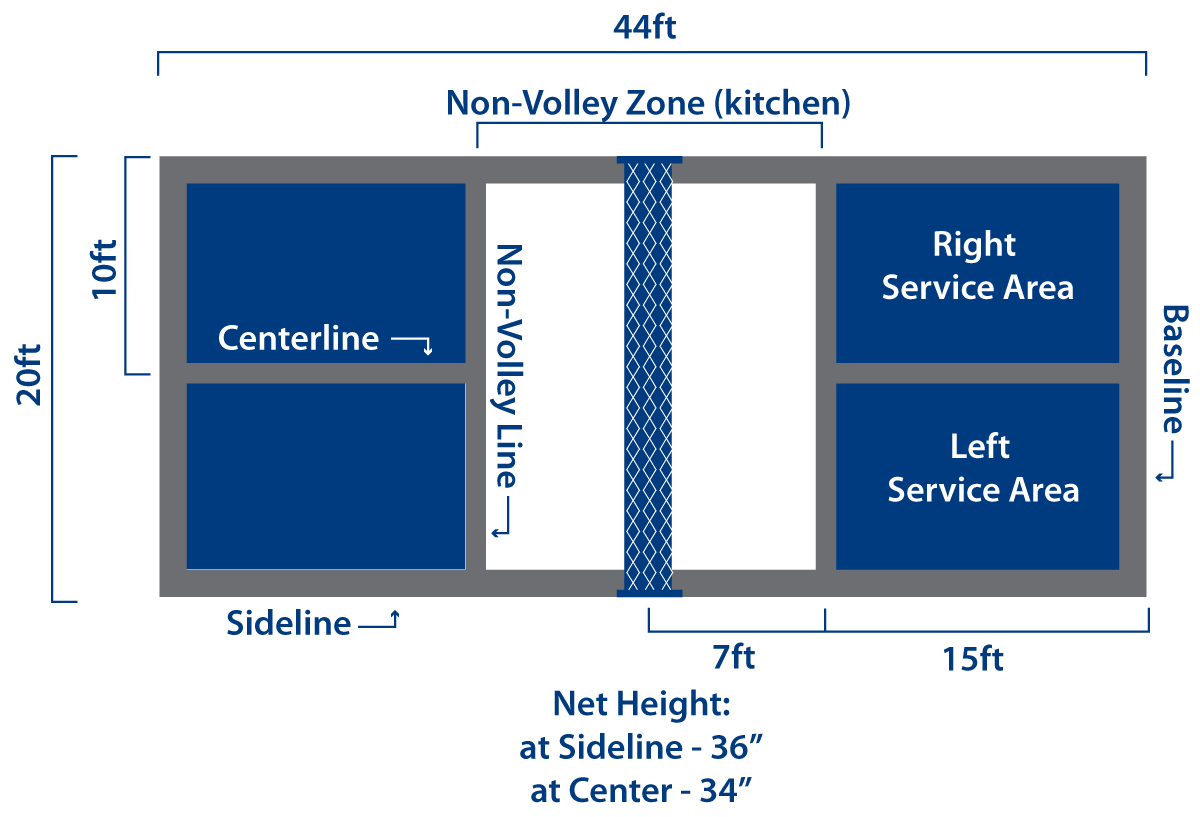
The pickleball court measures 20 feet wide by 44 feet long—the same dimensions as a doubles badminton court. The court is divided into several key areas:
The Net: Positioned at 36 inches high at the sidelines and 34 inches high at the center.
The Non-Volley Zone (The Kitchen): A 7-foot area on both sides of the net where players cannot volley the ball. This zone prevents players from executing smashes from right at the net.
Service Courts: Each side is divided into right and left service courts, separated by a centerline. These are 10 feet by 15 feet each.
Baselines: The back boundary lines from where serves are made.
Scoring Rules
Pickleball uses a rally scoring variant, but with some unique twists:
Points: Only the serving team can score points. Games are typically played to 11 points, and you must win by 2.
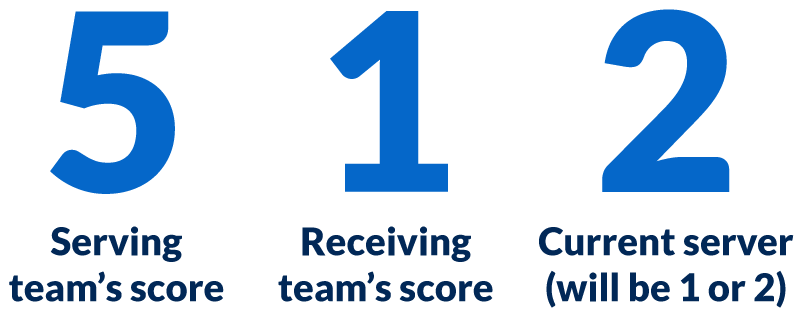
Calling the Score: The server must call the score before serving. In doubles, you announce three numbers: your team's score, the opposing team's score, and the server number (1 or 2). For example: "5-1-2" means your team has 5, opponents have 1, and you're the second server.
In Singles: You only call two numbers—your score followed by your opponent's score.
Let’s Learn How to PLAY Y'all
All serves must be made underhand with an upward arc. The paddle must contact the ball below your waist, and your arm must be moving in an upward motion.
The server must serve diagonally to the opponent's service court, similar to tennis.
When serving, both feet must be behind the baseline. At least one foot must be on the playing surface (not touching the baseline), and neither foot can touch the court until after the ball is struck.
Players may also use a drop serve, where you drop the ball and let it bounce before hitting it. With this method, many of the other serving restrictions don't apply, but you cannot propel the ball downward or add force when releasing it.
Unlike tennis, you only get one attempt per serve. If your serve doesn't make it over the net or lands out of bounds, it's a fault.
If the ball touches the net on the serve and still lands in the proper service court, the serve is good. There are no "let" serves requiring a redo.
The Non-Volley Zone (Kitchen) Rules
The kitchen—the 7-foot zone on either side of the net—has special rules:
No Volleying in the Kitchen: You cannot hit the ball in the air (volley) while standing inside the non-volley zone or while touching the line.
Momentum Matters: If your momentum from hitting a volley carries you into the kitchen, it's a fault—even if you hit the ball while outside the zone.
You Can Enter the Kitchen: You can step into the kitchen to hit a ball that has bounced. Once you've hit that ball, you can stay in the kitchen or return to the playing area.
The Line Is Part of the Kitchen: If you're touching the kitchen line, you're considered "in" the kitchen.
Faults and Violations
A fault occurs when a rule is broken, resulting in a dead ball and either a side out or point for the opposing team. Common faults include:
- Service Faults: Serving with improper form, serving to the wrong court, or foot faults during the serve.
- Kitchen Violations: Volleying while in the non-volley zone or being carried into it by momentum.
- Ball Out of Bounds: Hitting the ball outside the court lines or into the net.
- Double Bounce: Letting the ball bounce twice on your side before returning it.
- Hitting the Ball Before It Crosses the Net: You must wait for the ball to cross onto your side.
- Carrying or Double Hitting: Hitting the ball twice or carrying it on your paddle rather than striking it cleanly.
Types of Shots
Mastering the different shots in pickleball is key to elevating your game from beginner to advanced player. Each shot has its purpose, and knowing when and how to use them will make you a more strategic and effective player. Here's your complete guide to every shot you need to know.
Practice Tips:
- Work on your dink and third shot drop first—these are the foundation of good pickleball
- Drill specific shots with a partner rather than always playing games
- Video yourself to identify technical issues
- Focus on consistency before adding power
- Practice both forehand and backhand versions of each shot
- Play against better players who will expose weaknesses in your shot selection
The beauty of pickleball is that you can have fun and be competitive even while you're still learning these shots. Start with the basics, add new shots gradually, and most importantly, get out there and play!